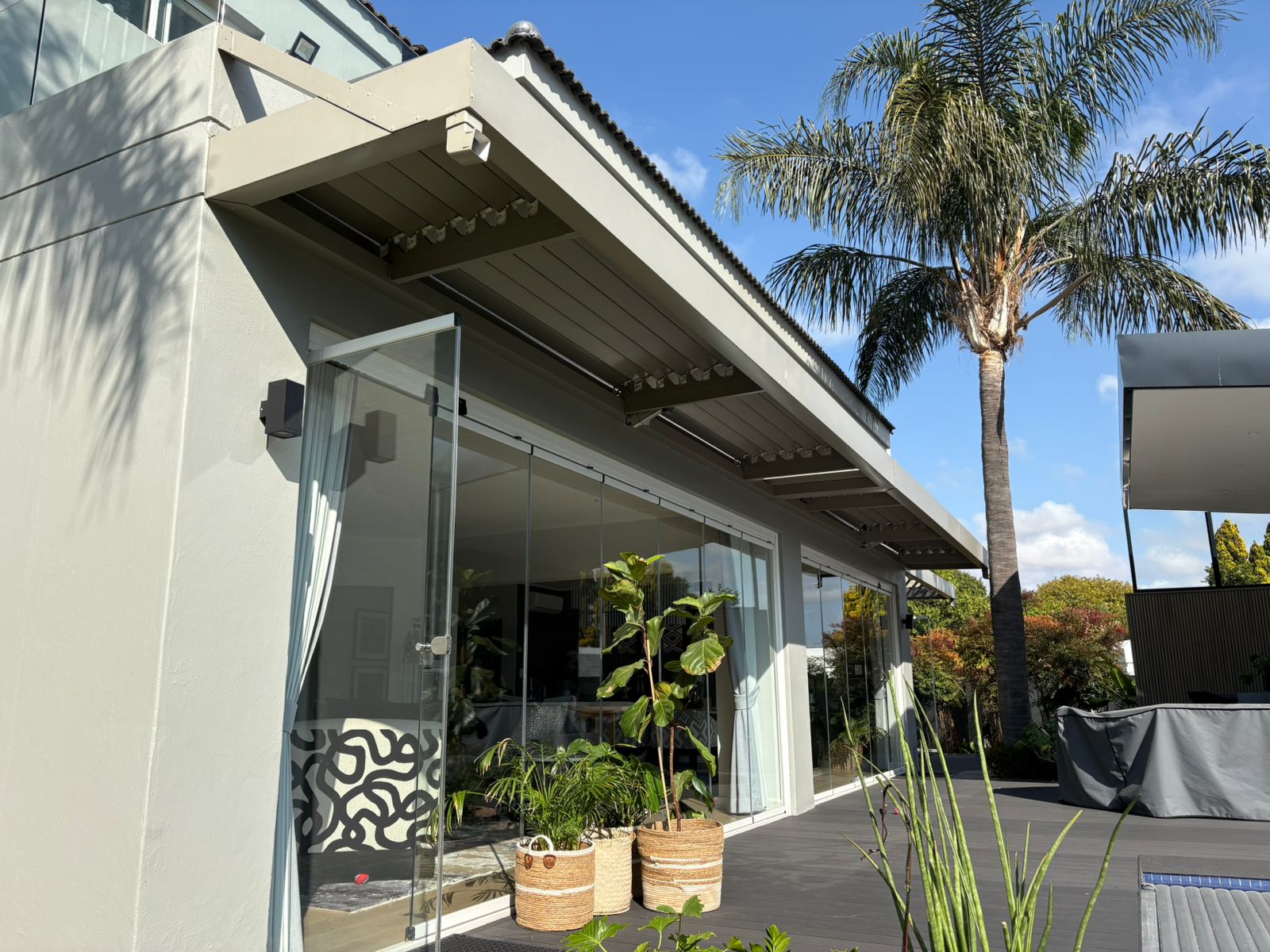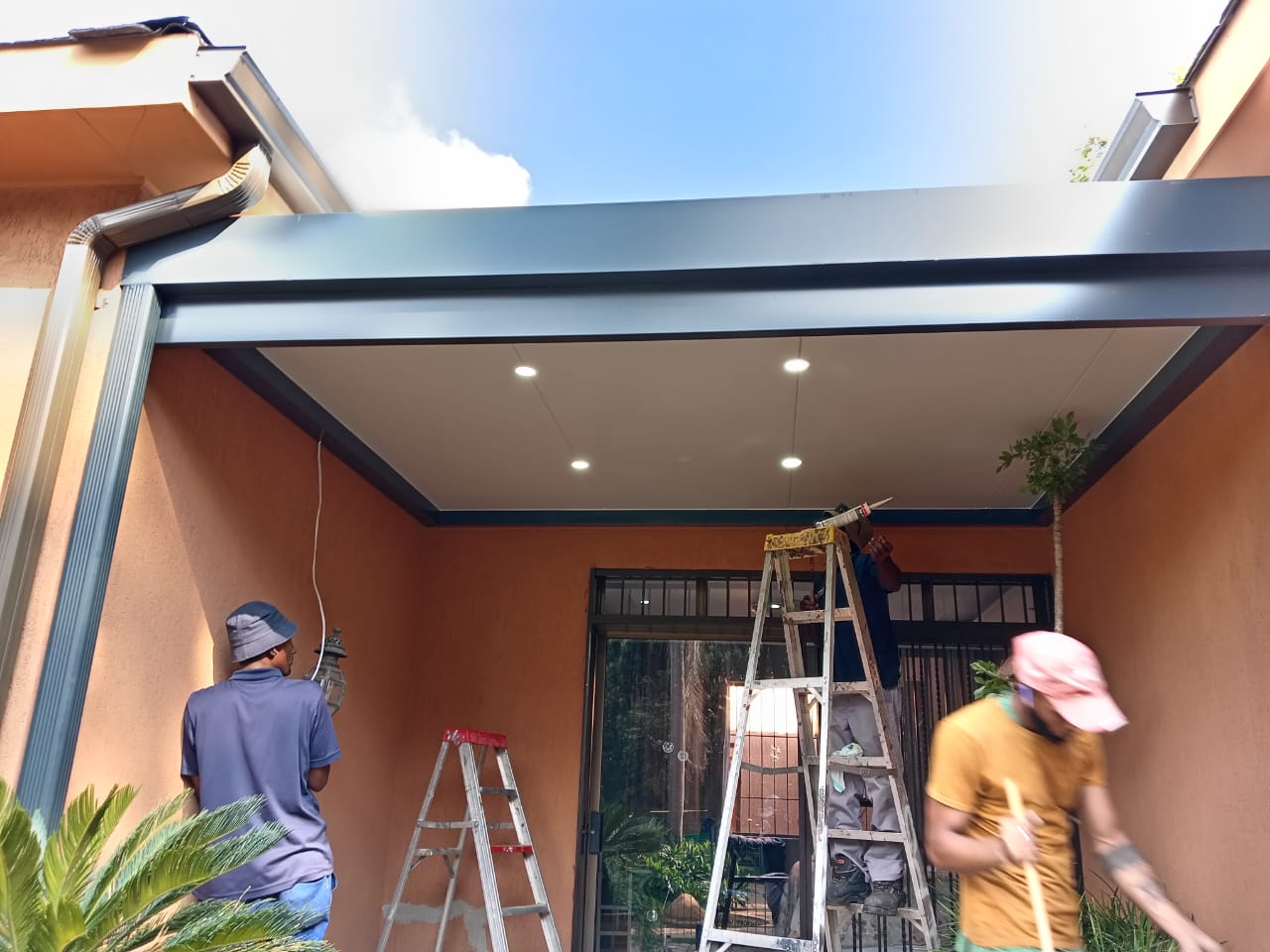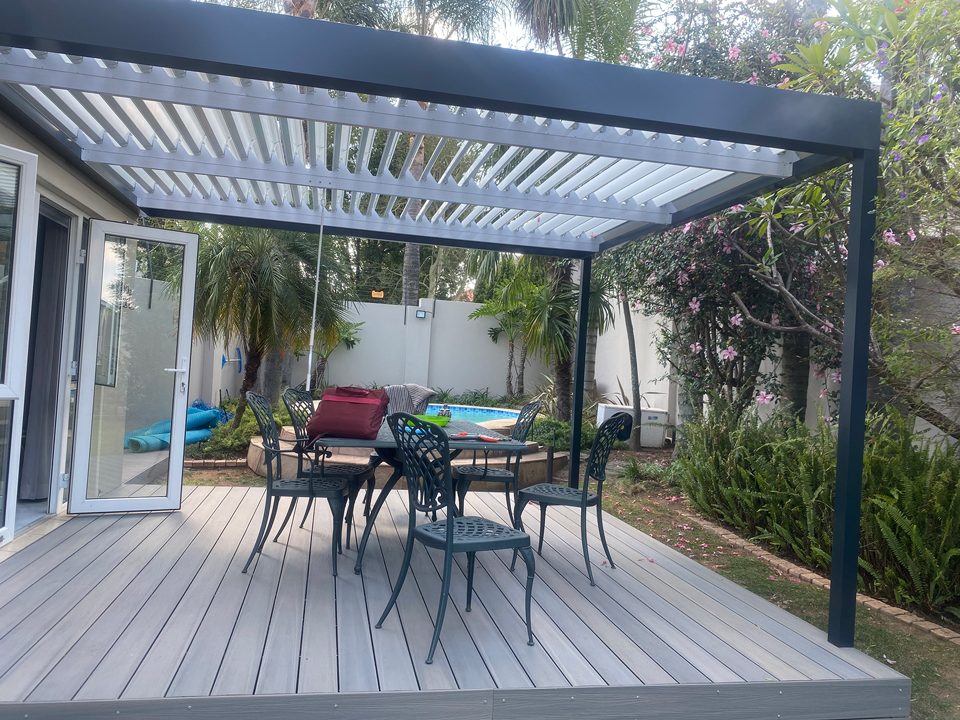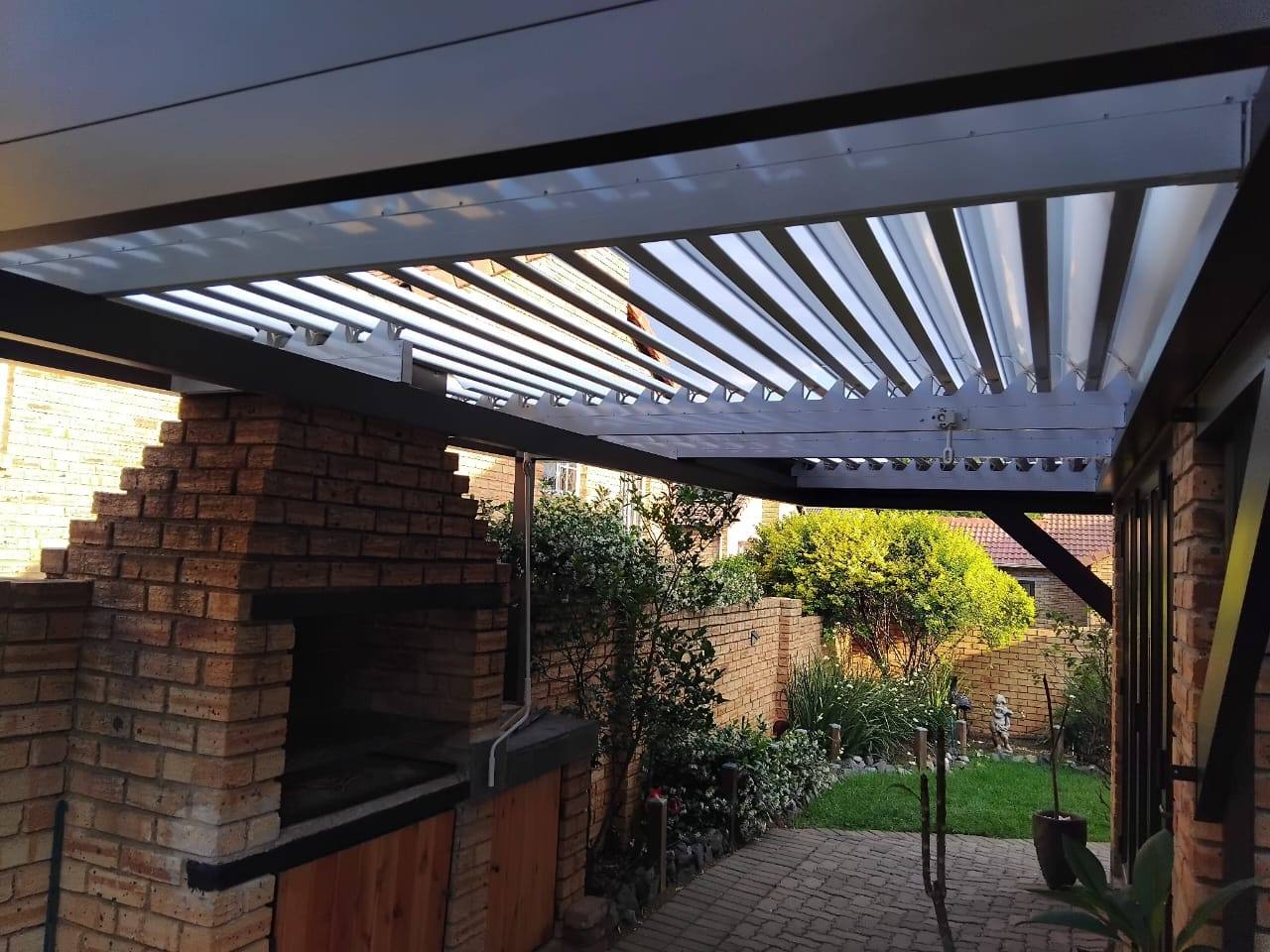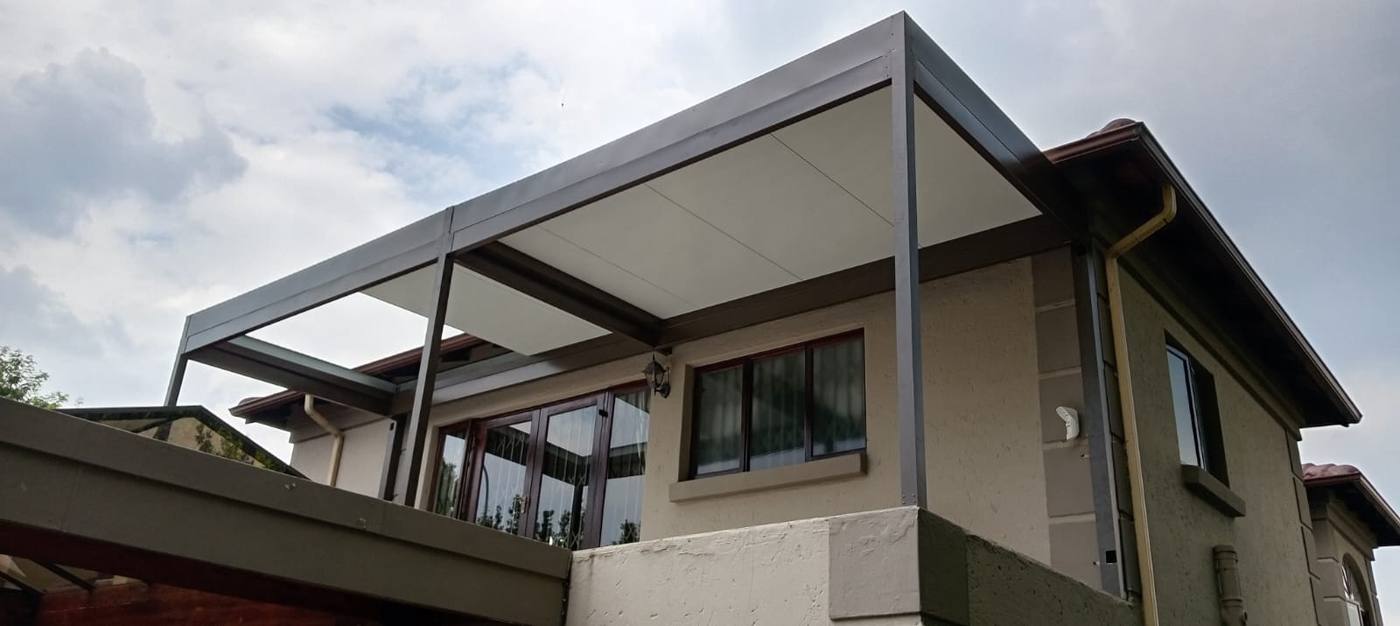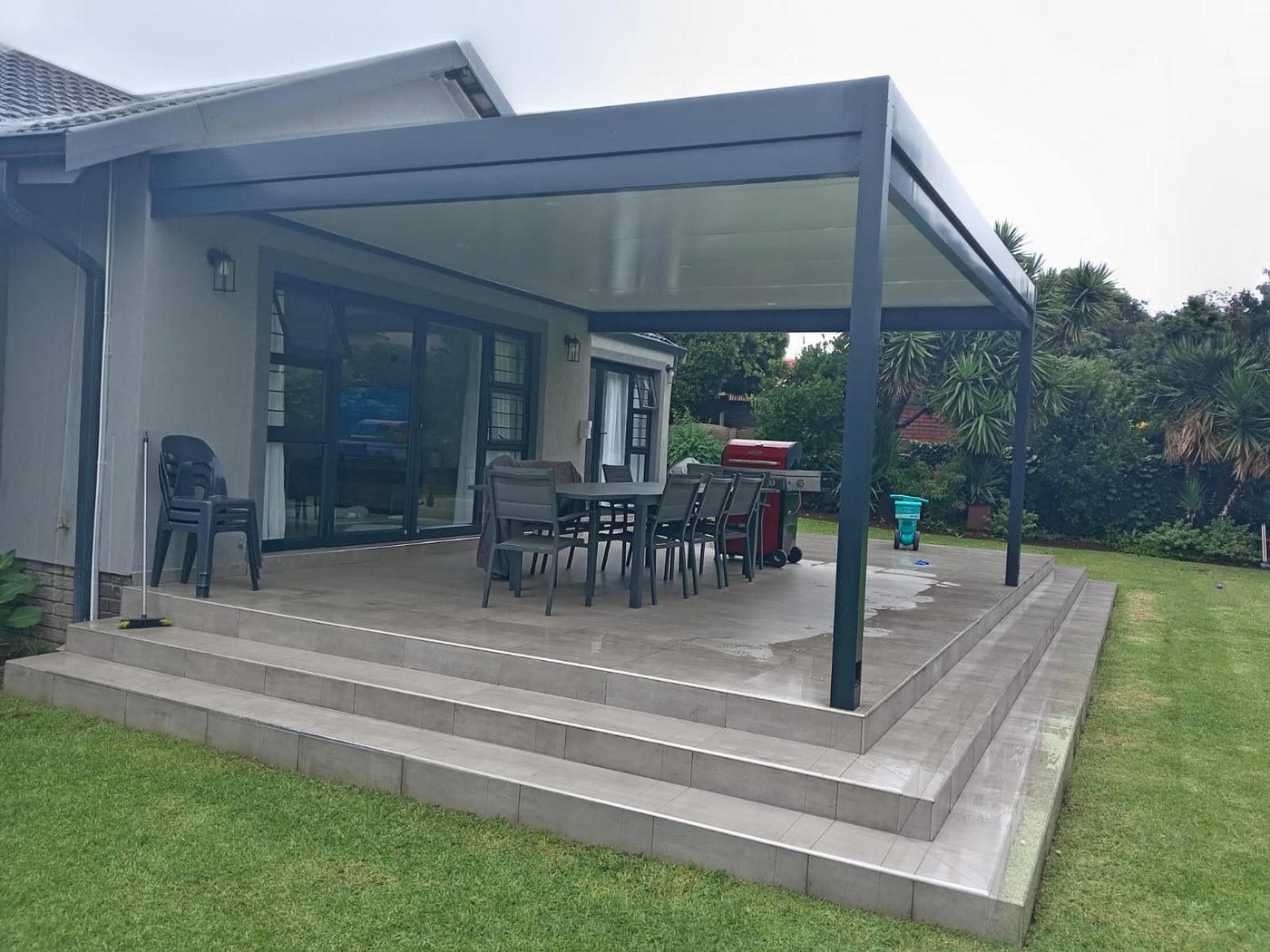

Location: Constantia Kloof, Roodepoort · System: Adjustable Louvre — bronze frame
The brief
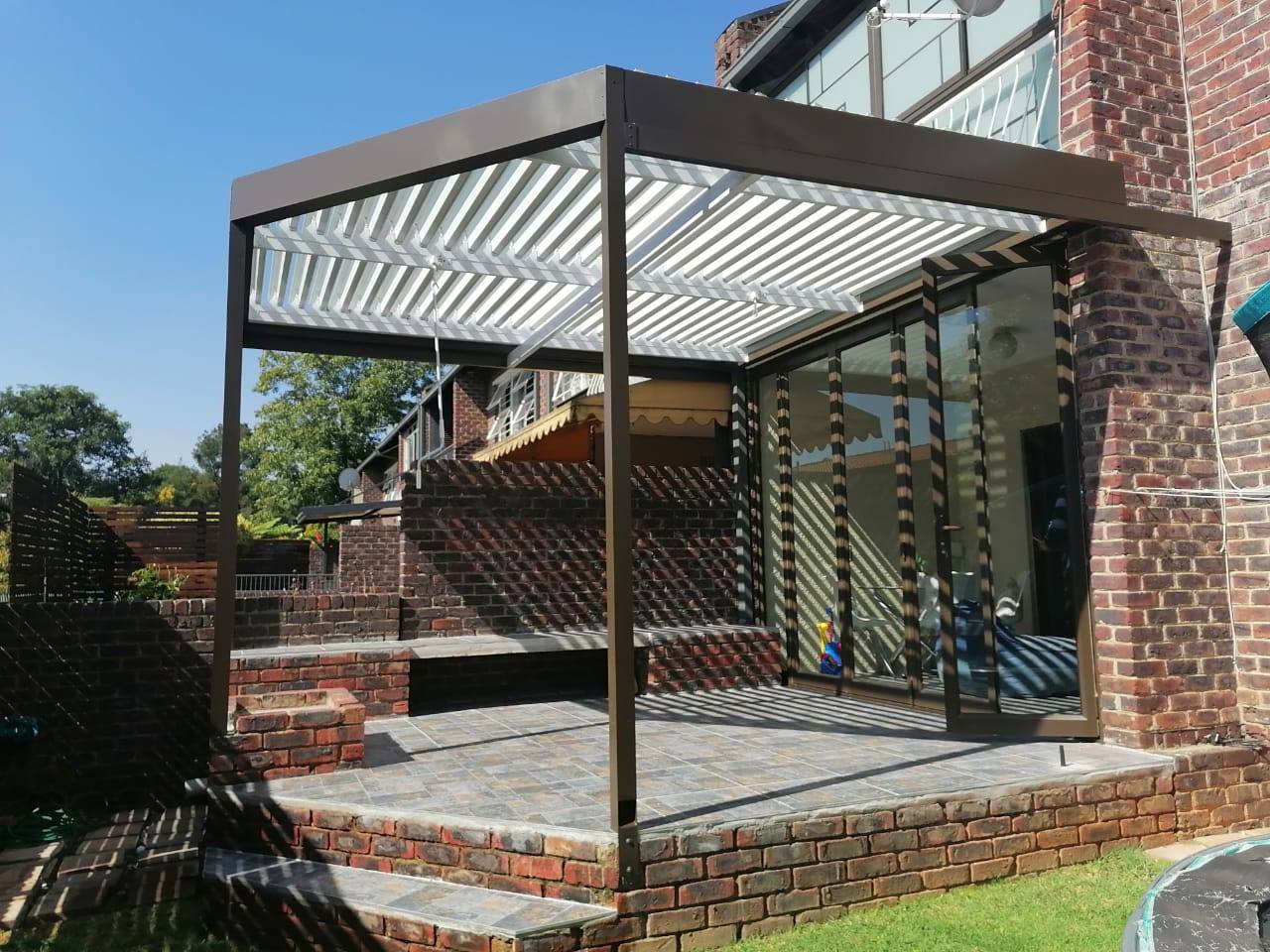
The terrace steps up out of the garden in brick and stone, with sliding doors onto it from the living area. Everything about the platform was solid; there was simply nothing over it.
Charcoal would have cut a hard line across warm brick. The structure needed to sit into the house rather than in front of it.
What we built
An adjustable louvre roof with a bronze frame and white blades, carried on posts set at the terrace edge so the paved platform stays clear underfoot.
The bronze picks up the brick and the stonework; the white blades keep the underside light and push daylight back through the sliding doors. The combination is the whole point of being able to specify frame and blade colour separately.
If this is the shape of what you want, start with Adjustable Louvre Awnings — or see more from Roodepoort & the West Rand.
Landing a structure on an existing platform
Building onto a terrace that already exists means the post positions are constrained by what is underneath — brick edges, stone facing, and whatever the platform was built off originally.
That gets checked on site before manufacture, not discovered on installation day. Where a post cannot land safely on an edge, the frame is set out to bring it back onto solid ground instead.
The specification behind it
- Adjustable aluminium louvre roof — bronze frame, white blades
- Posts set at the terrace edge, clear of the paved platform
- Blades open and close on a gearbox
- 95% watertight in Highveld storms, with a full all-round gutter
- 15-year guarantee on aluminium
Two-tone is not a compromise
Clients often assume mixing frame and blade colour is a way of splitting the difference. It is the opposite: each colour is chosen for the job it does.
The frame is what the neighbours and the street see, so it answers to the house. The blades are what you see from underneath and what the rooms behind borrow light from, so they answer to the interior.
If you’re considering the same
Take a photograph of your house in afternoon light before choosing a frame colour. Brick and plaster shift considerably between morning and evening, and bronze reads very differently in each.