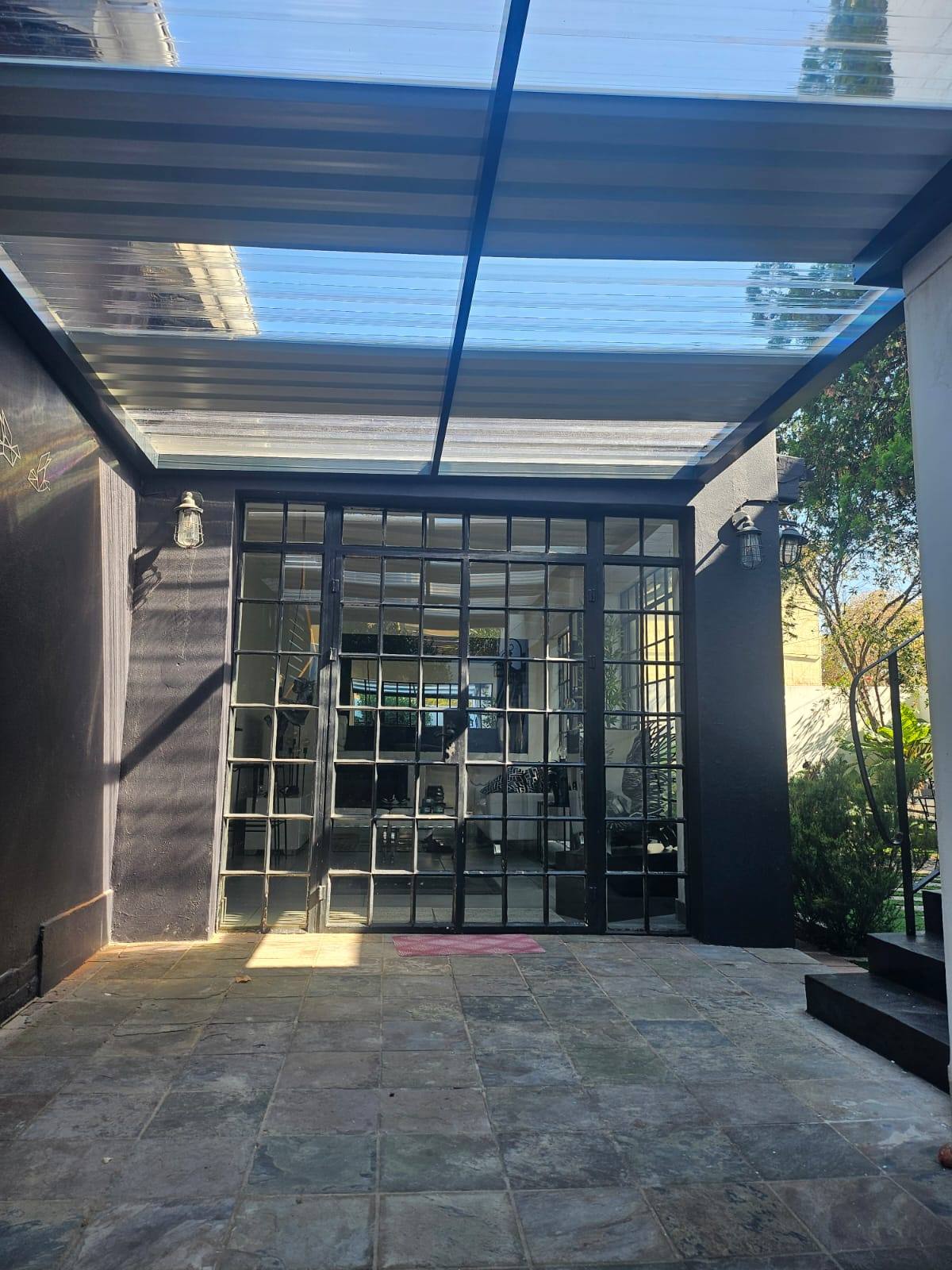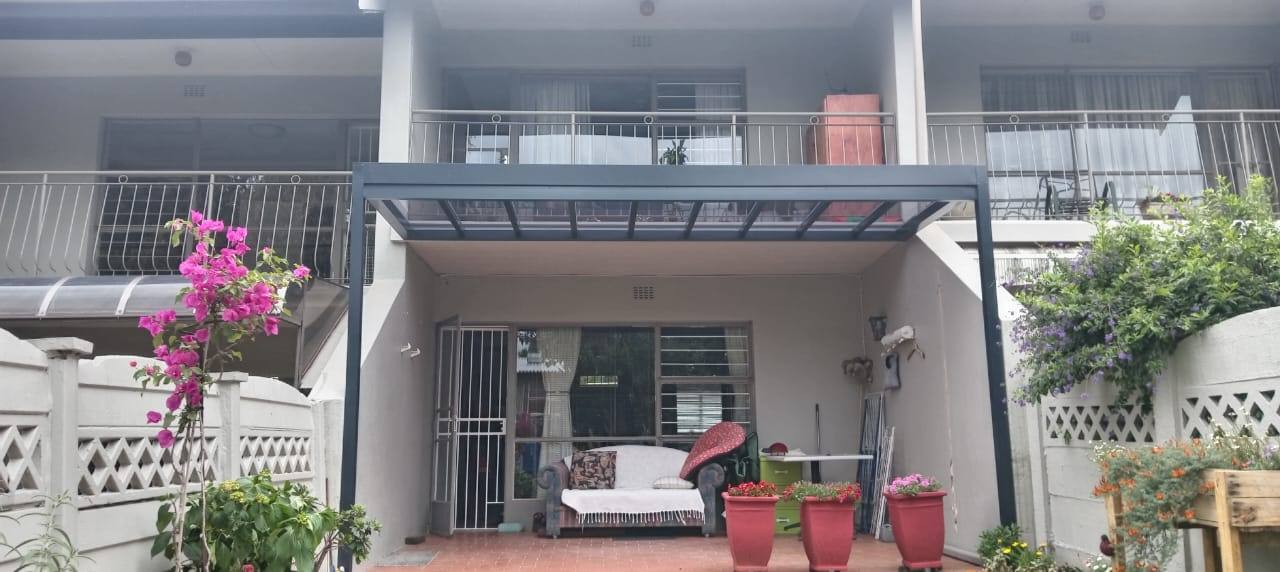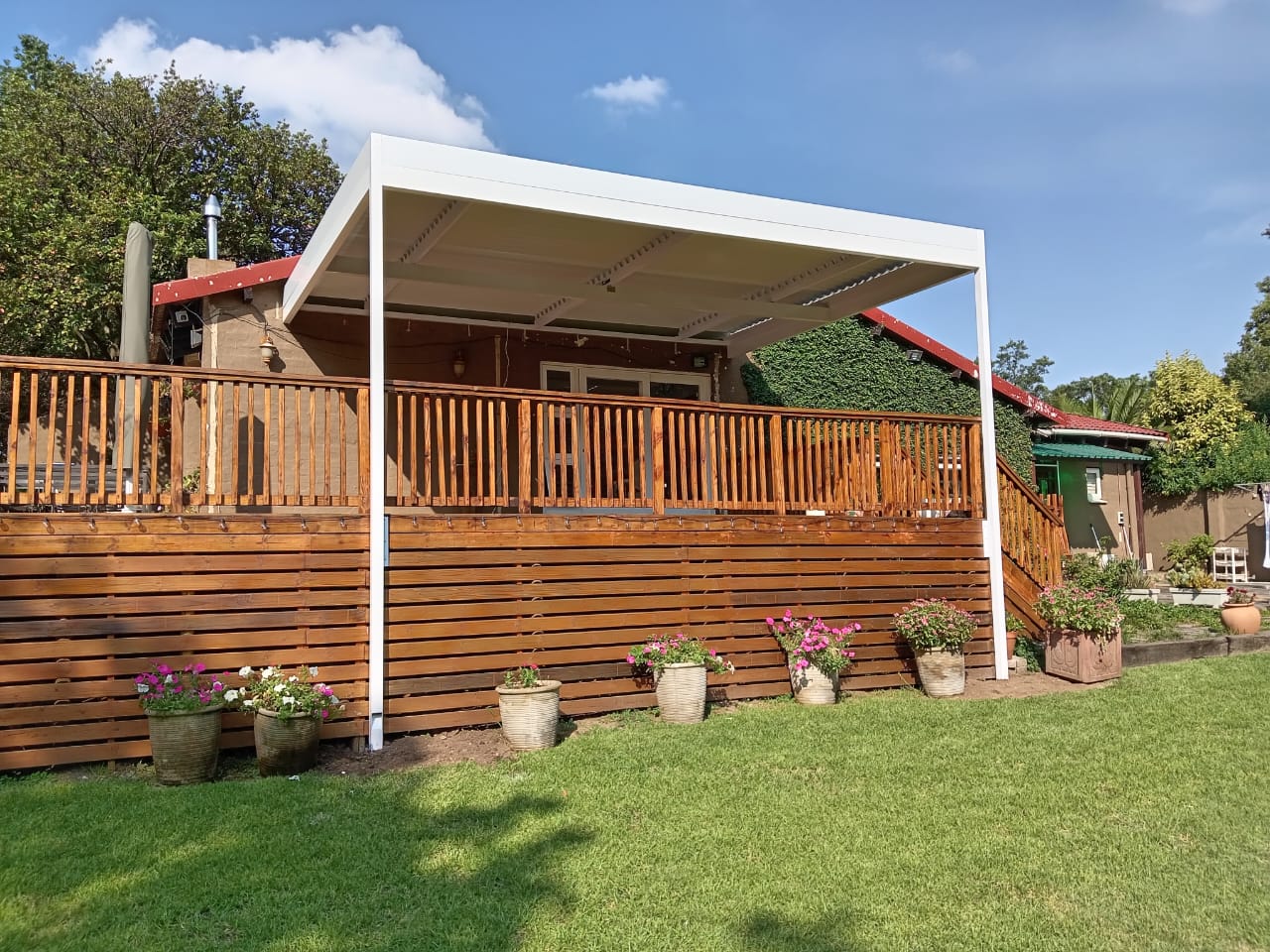

Location: Woodmead, Sandton · System: Adjustable Louvre — courtyard
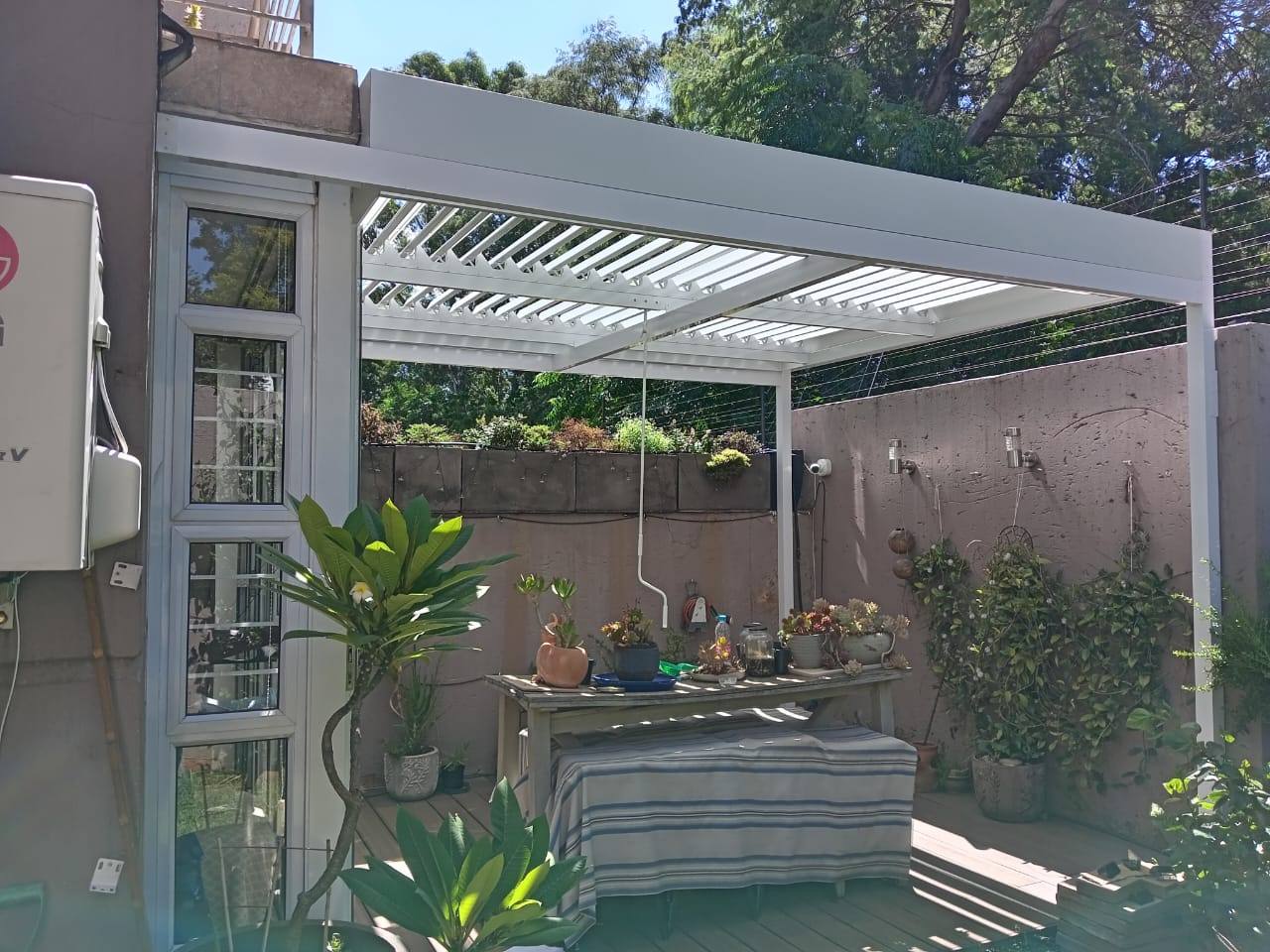
The brief
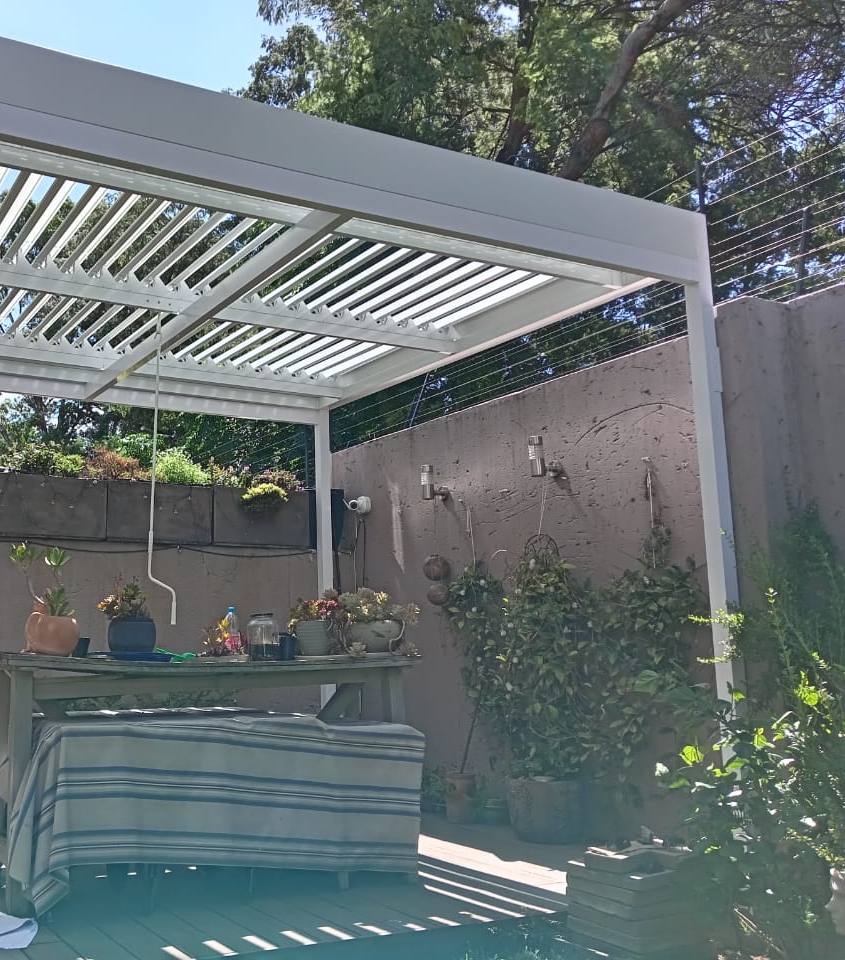
A narrow courtyard enclosed by boundary walls, with a door out of the house at one end and planting along the sides. Attractive, and useless in the middle of the day.
Cover here has to avoid turning a bright courtyard into a dark one, and avoid giving up the planted edges to structure.
What we built
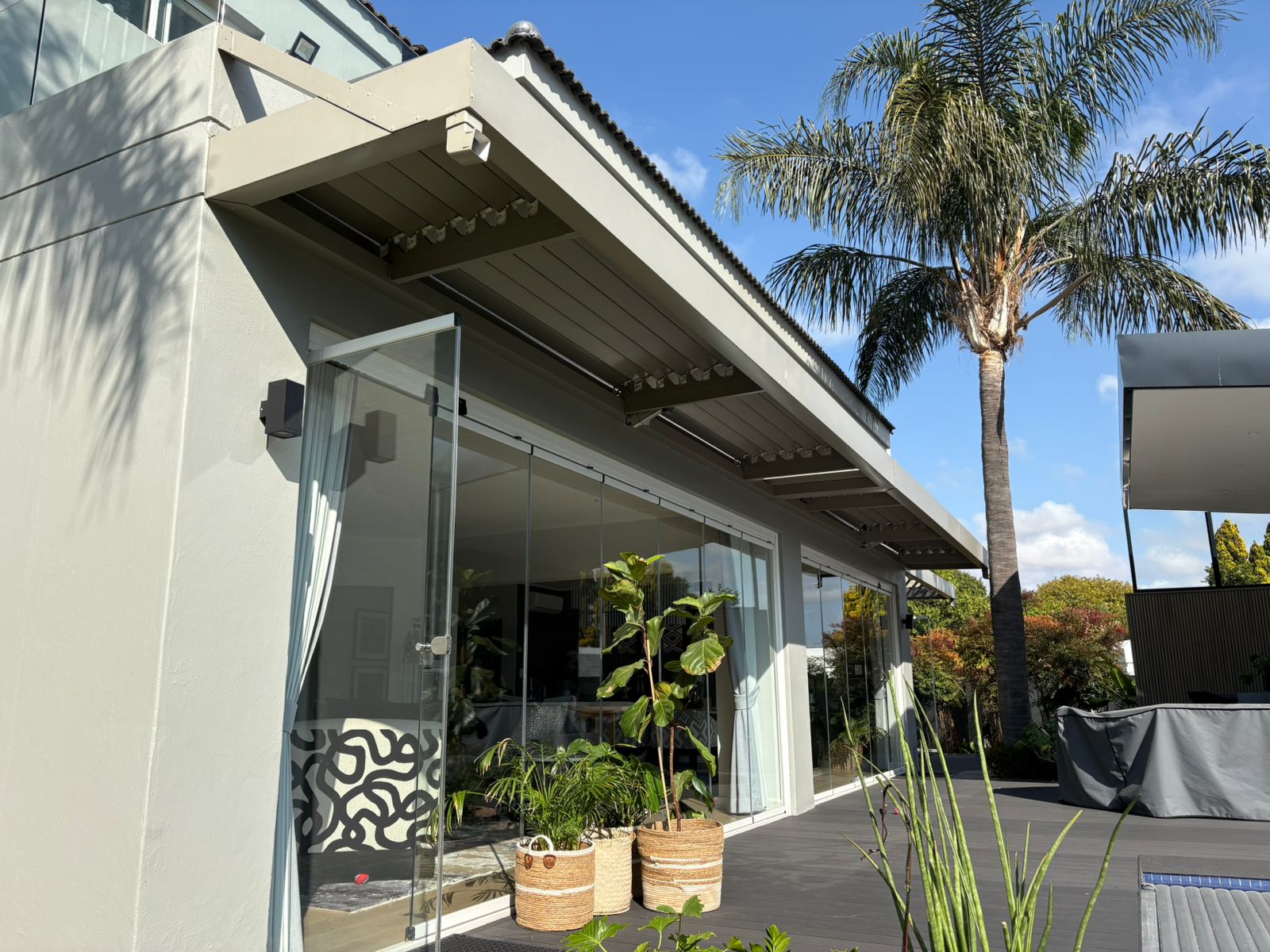
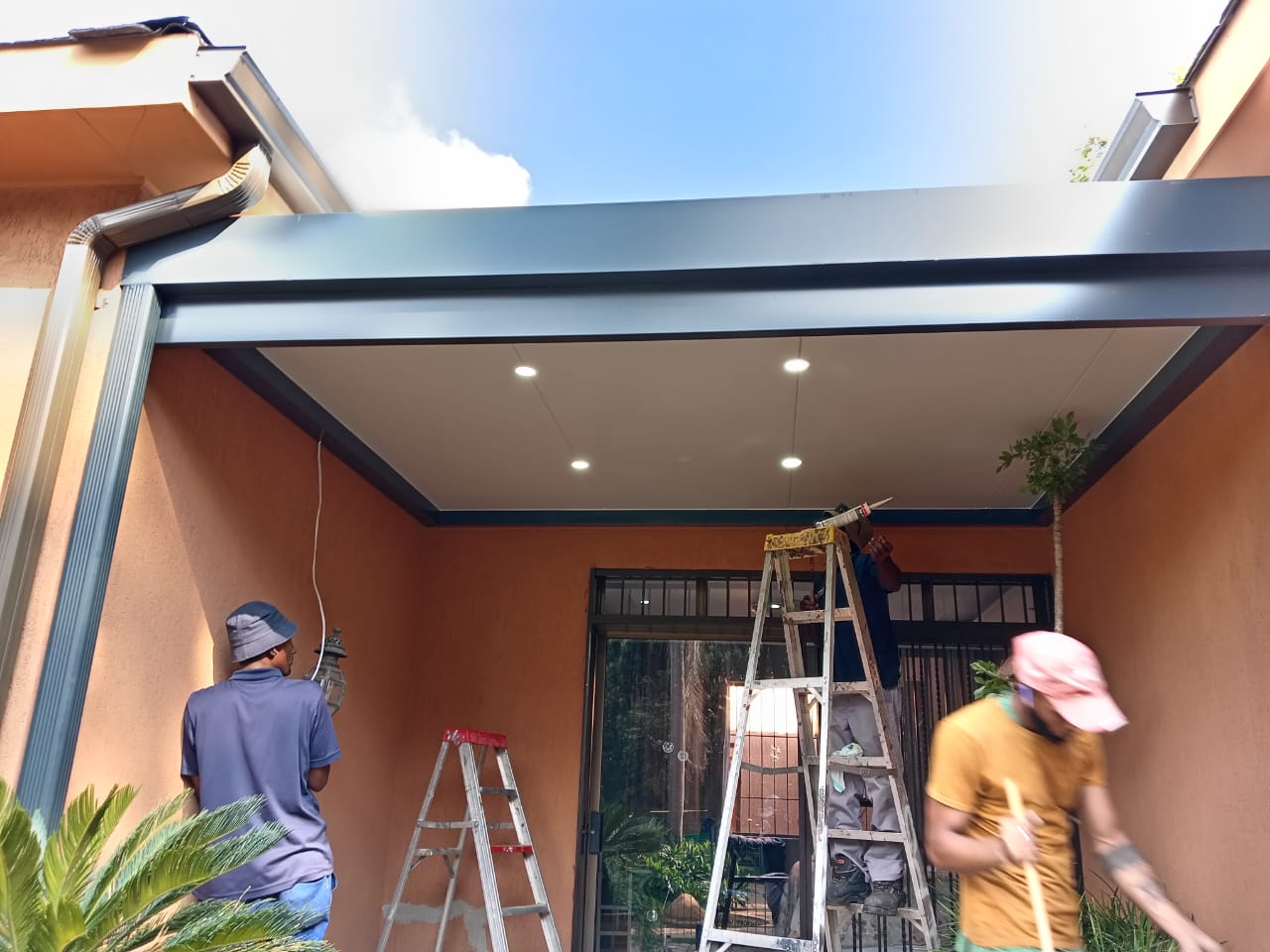
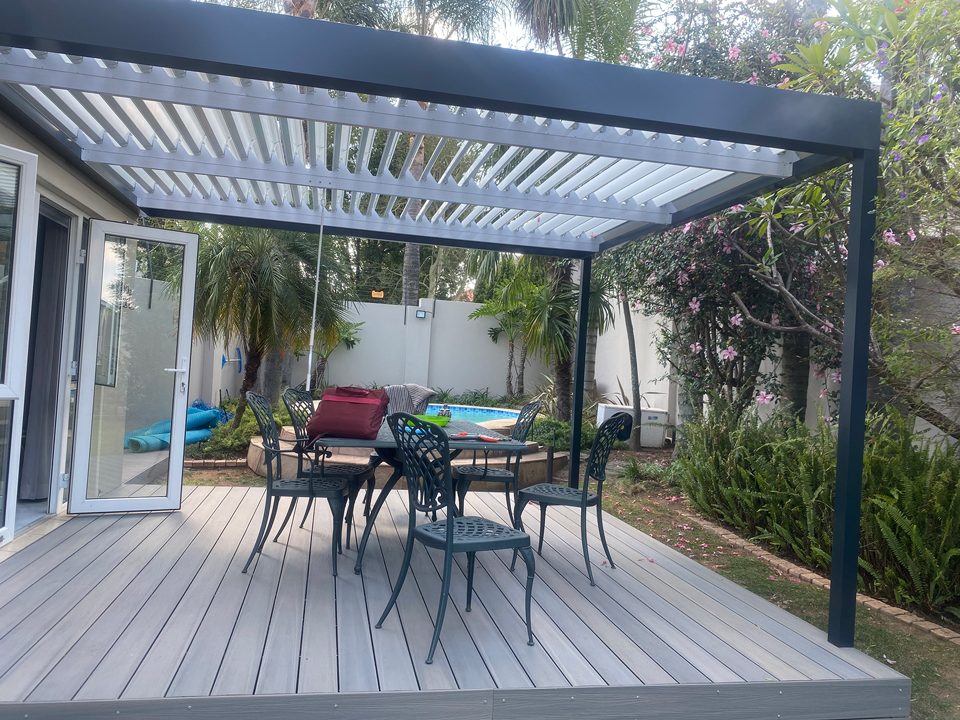
A white adjustable louvre roof spanning from the house across to the boundary wall, carried on two slim free-standing posts set against the boundary wall line. Everything else lands on walls that were already there.
White blades were the obvious choice: a courtyard has no open horizon to draw light from, so all of it comes from above. Adjusting the blades changes the space from shaded to open-to-the-sky.
The system itself is set out under Adjustable Louvre Awnings, and there is more of our work in Sandton & Morningside.
Reading a courtyard before you cover it
The instinct in a small space is to keep the structure light. The better question is where the structure lands. A post out in the open floor of a courtyard this size would have taken the walking route, so both posts here stand tight against the boundary wall line.
Keeping them on the wall line costs a little more in section depth and saves the open floor entirely — which in a courtyard is the only measurement that matters.
The specification behind it
- Adjustable aluminium louvre roof, white throughout
- Spans house wall to boundary wall on two slim posts set against the wall line
- Blades open and close on a gearbox
- Gutter integrated into the perimeter beam
- 15-year guarantee on aluminium
Adjustable blades matter more in a small space
On a big patio, a fixed roof still leaves you plenty of unshaded garden. In an enclosed courtyard, a fixed roof is the whole sky.
That is the case where adjustability stops being a luxury: closed for a storm, open for the winter sun that a courtyard only gets for a few hours anyway.
If you’re considering the same
In a tight space, ask for post positions to be marked on the paving at the site visit and live with the tape for a day before you approve it.